
Posted by Kate Koel

Can I Wear My Jewelry in the Shower or Pool?
Yes, you can wear some jewelry in the shower, but I do not recommend wearing most jewelry in the pool. Simple, sturdy pieces made from 14k gold-filled, sterling silver, solid gold, or platinum can usually handle clean water exposure. But chlorine, salt water, sweat, soap, friction, and daily wear can still affect the finish, stones, clasps, prongs, and delicate details over time. If a piece has pearls, turquoise, soft gemstones, silk thread, delicate settings, resin, botanicals, or strong sentimental value, take it off before showering or swimming.
The honest answer is not simply “yes” or “no.” It depends on the metal, the construction, the stones, the coating, the type of water, and your lifestyle. A simple 14k gold-filled chain and a large statement earring are not meant to live the same life. A sturdy plain bangle and a pearl necklace should not be treated the same way. A ring you wear to dinner and a ring you wear while lifting weights are going through completely different stress.
That is why I do not like giving one blanket “yes, it is waterproof” answer for every piece of jewelry. It sounds easy, but it is not honest.
At Kate Koel, I prefer to explain what a piece is made of, how it is designed, and what kind of wear makes sense for that specific style. Some pieces are perfect for everyday wear. Some pieces are better for special occasions. Some pieces can handle occasional water exposure. Some should absolutely be removed before showering, swimming, or going into a hot tub.
Jewelry is not magic. It is a physical object that lives on your body, and the more you understand it, the longer you can enjoy it.
What Is the Best Jewelry to Wear in the Shower?
For showering, simple metal-first jewelry is usually the safest option.
If you want a budget-friendly gold look, I would choose a sturdy 14k gold-filled chain. If you prefer silver, choose sterling silver. If your budget allows for fine jewelry, solid gold or platinum will be even more durable.
The best shower-friendly pieces are usually:
- Simple chains
- Slightly thicker, sturdier chain styles
- Plain bangles
- Minimal earrings with secure backs
- Solid gold, platinum, sterling silver, or 14k gold-filled pieces
- Designs without delicate stones, pearls, silk thread, or fragile elements
For earrings, I would also think about construction. If you wash your hair while wearing earrings, your hair can catch around the backing. A secure, comfortable earring back matters. The metal may be durable, but the design still needs to make sense for the activity.
This is why I always ask customers what style they are considering and how they want to wear it. A simple everyday chain and a large statement earring are not meant to live the same life.
If you want the easiest place to start, look for simple, durable pieces in the Everyday Essentials collection, especially if your goal is jewelry you can reach for constantly without overthinking every outfit.
What Jewelry Should You Not Wear in the Shower?
Some jewelry is well made but still not meant for nonstop wear.
I would not recommend showering in statement earrings, pearl necklaces, silk-strung beads, gemstone-heavy designs, turquoise, delicate rings, or pieces with many moving parts. These pieces can be stunning, meaningful, and beautifully crafted, but they deserve more care.
Pearls are a perfect example. Pearls can lose their luster with repeated water exposure, and if they are strung on silk thread, water can soften and weaken the silk over time.
Turquoise is another example. It can be absolutely gorgeous and last for many years when treated properly, but it does not appreciate constant water exposure, especially pool water or ocean water.
Semi-precious gemstone beaded pieces should also be treated with care. Many stones are beautiful because of their natural structure, color, and surface. That does not mean they want to be soaked every day.
A piece does not have to be low quality to need care. Sometimes the most beautiful materials are the ones that require the most respect.
Can I Wear Rings in the Shower?
It depends on the ring.
A simple metal band made from solid gold, platinum, sterling silver, or 14k gold-filled metal can usually handle clean water much better than a delicate ring with a stone, resin crystal, pearl, turquoise, or fragile setting.
But rings go through more than water. Rings touch everything. They rub against towels, shampoo bottles, gym equipment, countertops, bags, keys, and other rings. They also sit on the part of your body that is constantly working.
That is why I would be especially careful with dainty rings. Even if the metal itself is durable, a thin ring can bend, scratch, or wear faster if you treat it like it is indestructible.
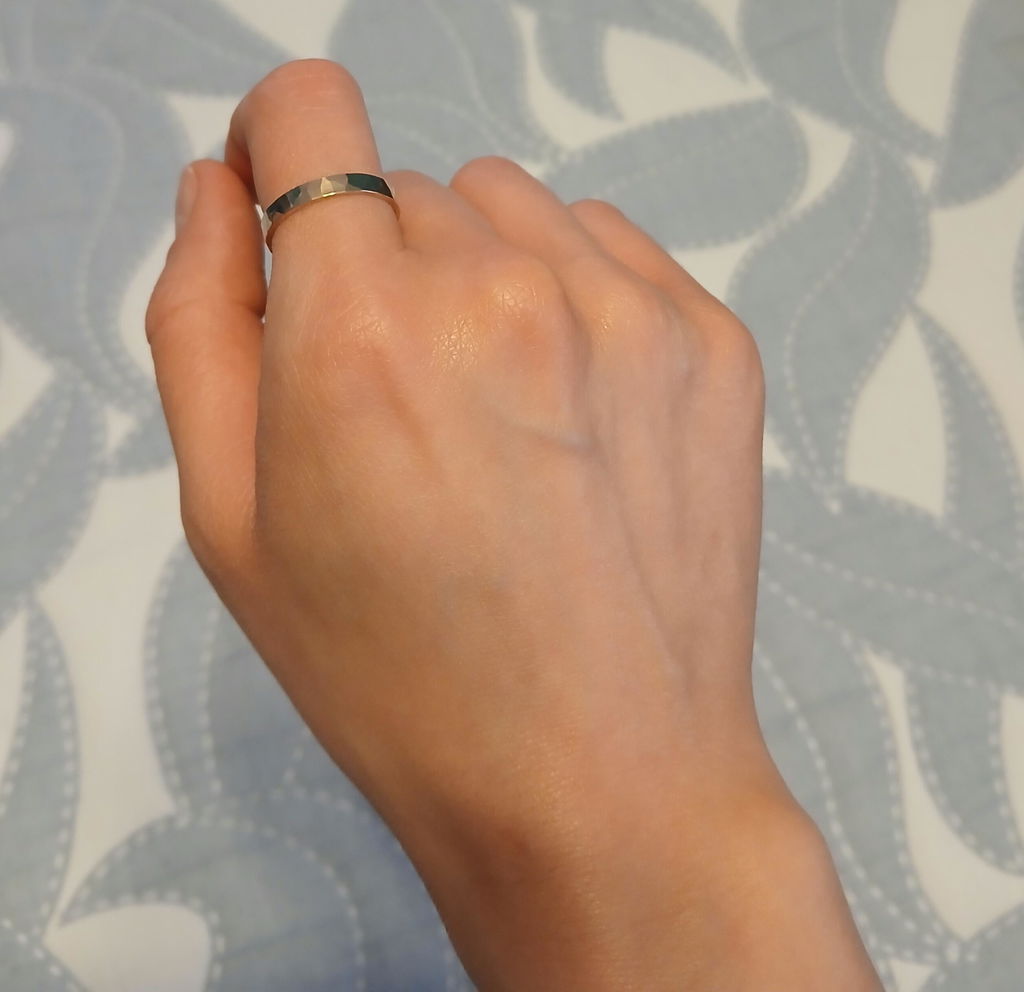
If you love stacking rings, choose styles that match your real lifestyle. A textured everyday band like the Disco stacking ring can be a playful daily piece, but I would still remove rings before heavy workouts, lifting weights, harsh cleaning, pool swimming, or anything that puts pressure on your hands.
If you are building a daily stack, explore the rings collection with this in mind: the best everyday ring is not only the one you love visually, but the one that makes sense for how you actually use your hands.
What Jewelry Can You Wear in the Pool?
My honest opinion is simple: if it is an heirloom piece, a sentimental piece, a fine jewelry piece with diamonds, or a piece you would be heartbroken to lose, do not wear it in the pool.
Pool water contains chlorine. Chlorine is not gentle. Over time, it will react with metals and find weak points in a piece of jewelry. Prongs, solder joints, delicate links, tiny crevices, clasps, hinges, and settings can all be affected by repeated exposure. Jewelry is a small object with many stress points. Even if the metal itself is strong, the entire piece is more than just the metal.
If you want something to wear casually around water, choose a simple, sturdy piece without stones. A thicker chain or plain bangle is a better choice than a delicate gemstone ring or pearl necklace.
And if you are going into a pool regularly, especially for swimming, I would remove your jewelry. Not because you cannot wear jewelry your own way, but because chemistry does not care about marketing.
Can I Wear Anklets in the Pool or Ocean?
Anklets are often associated with vacations, beaches, sandals, and summer styling, so this question comes up a lot.
A simple gold-filled or sterling silver anklet can be a beautiful warm-weather piece, especially if it is lightweight, comfortable, and not overly delicate. But anklets also live in a high-friction area. They rub against shoes, sand, towels, sunscreen, salt water, and sometimes other anklets.
That means you should be realistic. An occasional beach day is very different from wearing the same anklet through every swim, every shower, every workout, and every vacation activity.
If you want a water-friendly vacation look, choose a simple chain anklet and rinse it with clean water after ocean exposure. Avoid anklets with pearls, delicate beads, soft gemstones, or fragile charms if you plan to wear them near water.
For styling, the anklets collection is a better place to look for lightweight vacation jewelry than heavy, stone-filled pieces you would be nervous to expose to sand or salt.
What About Ocean Water?
Ocean water brings a different set of problems. Salt can be drying, abrasive, and harsh on finishes over time. Sand can also scratch jewelry, especially if pieces are rubbing against each other.
An occasional beach day is not the end of the world for a sturdy gold-filled chain or simple metal piece. But I would not make ocean swimming a daily habit for jewelry you want to preserve beautifully.
Again, this is about realistic expectations. If you wear jewelry into the ocean, rinse it afterward with clean water and dry it gently. That small step can help a lot.
Is 14k Gold-Filled Jewelry Waterproof?
I would not use the word waterproof as an absolute promise, but 14k gold-filled jewelry is one of the best options for everyday, water-friendly jewelry if you want the look of gold without the price of solid gold.
Gold-filled jewelry is not the same as gold plating. It has a real layer of gold mechanically bonded to a base metal core, usually brass. That outer layer is much thicker and more durable than the thin layer used in standard gold-plated fashion jewelry.
That is why high-quality 14k gold-filled chains can last for years with normal everyday wear. Clean water, handwashing, occasional shower exposure, and regular daily life are usually not a problem for a well-made gold-filled chain.
But again, that does not mean it is indestructible.
Chlorine, salt water, harsh chemicals, abrasive surfaces, gym equipment, constant friction, and rough wear can dull the finish over time. If someone promises you that any jewelry will stay completely untouched forever, that is not a realistic promise.
Is Sterling Silver Waterproof?
Sterling silver can handle water, but it reacts differently than gold.
Clean water is usually not the issue. The bigger concern is what is in the water and what the silver is exposed to afterward. Sulfur, chlorine, salt, humidity, lotions, and certain chemicals can cause sterling silver to tarnish faster.
The good news is that sterling silver tarnish is usually reversible. Tarnish is not the same thing as the jewelry being ruined. It can often be polished and restored.
My own sterling silver bracelet reacted to sulfur-smelling well water by developing a dull, darkened surface. But once I returned to clean water, even that improved on its own.
So yes, sterling silver can be a beautiful everyday metal, especially for people who love silver. But if you want a piece to look bright all the time with almost no care, you need to understand that sterling silver naturally requires more maintenance than gold-filled or solid gold jewelry.
For a deeper material-by-material routine, read the Jewelry Cleaning & Care Guide before trying random cleaning advice on pieces you love.
Is PVD Stainless Steel Jewelry Waterproof?
PVD stainless steel jewelry is one of the biggest categories being marketed as waterproof right now.
PVD stands for physical vapor deposition. It is a coating process used to apply a finish to stainless steel. Stainless steel can be a very durable material, and good-quality stainless steel is often used for sensitive skin jewelry. The problem is not that stainless steel is bad. The problem is that the marketing around PVD stainless steel jewelry has become extremely aggressive.
Many brands advertise PVD stainless steel jewelry as waterproof, life-proof, tarnish-proof, hypoallergenic, and sometimes even backed by a lifetime guarantee.
That sounds amazing. But the reality is more nuanced.
There are different grades of stainless steel. There are different levels of PVD quality. There are different manufacturers, different coating processes, different thicknesses, and different finishing standards. Not every piece is equal.
Also, PVD gold-tone steel jewelry usually does not contain real gold. That is why the color often looks different from true gold. To my eye, many PVD gold pieces have a cooler, greener, more neon-yellow tone compared to the warmth and luster of real 14k gold.
Some manufacturers may add a thin layer of gold plating on top to make the color look more luxurious at first. But tiny plating layers can wear away and reveal the color underneath.
This does not mean PVD steel jewelry is automatically terrible. It means customers should understand what they are buying.
Is Waterproof Jewelry Hypoallergenic?
The word hypoallergenic is another term that is often used too broadly.
Stainless steel is commonly recommended for sensitive skin, but not all stainless steel is the same. Some lower-grade stainless steel can contain more nickel, and nickel is a common cause of irritation for many people. A customer with sensitive ears or sensitive skin should not assume every “waterproof” or “hypoallergenic” piece is automatically safe.
The same is true for coatings. If the coating wears, the metal underneath becomes more relevant. If you do not know what the base metal is, what the coating is, or how the piece was made, you do not really know what is touching your skin long term.
For sensitive ears, I would pay special attention to posts, hooks, and backs. The decorative charm matters less than the part that actually sits inside your ear.
Is Waterproof Jewelry Handmade?
This is another topic that deserves honesty.
A lot of waterproof stainless steel jewelry is manufactured overseas because working with steel requires heavy-duty machinery. PVD coating also requires professional equipment, including a vapor chamber. This is not something a typical local jeweler is making by hand in a small studio.
There is nothing wrong with manufactured jewelry when it is described honestly. The problem starts when a business buys fully manufactured charms, attaches them to fully manufactured chains, and markets the entire collection as handmade in the same way as a jeweler who is hand-fabricating pieces from raw materials.
Those are completely different levels of craftsmanship, labor, skill, and design.
A business can choose manufacturing. A business can choose private label. A business can choose handmade production. But customers deserve accurate language so they can understand what they are supporting.
My Honest Rule as a Jeweler
If you want jewelry you can wear often, start with simple, sturdy, metal-first designs.
Choose 14k gold-filled if you want a more budget-friendly gold look. Choose sterling silver if you love silver and do not mind occasional polishing. Choose solid gold or platinum if your budget allows and you want the most durable fine jewelry option.
Be more careful with:
- Pearls
- Turquoise
- Soft or porous gemstones
- Silk-strung necklaces
- Statement earrings
- Dainty rings
- Beaded gemstone jewelry
- Resin or botanical pieces
- Jewelry with many moving parts
- Heirloom or sentimental pieces
And most importantly, match the jewelry to the life you expect it to live.
If you want more guidance on building a realistic daily jewelry wardrobe, read Everyday Jewelry: What You Can Really Wear Daily, because everyday jewelry should be chosen with both beauty and common sense.
Final Answer: Can You Wear Jewelry in the Shower or Pool?
You can wear some jewelry in the shower, especially simple 14k gold-filled, sterling silver, solid gold, or platinum pieces. But I would avoid showering in pearls, turquoise, delicate rings, statement earrings, silk-strung beads, soft gemstones, or anything with fragile construction.
For pools, I am much stricter. Chlorine is harsh. If the piece is sentimental, expensive, stone-set, delicate, or irreplaceable, take it off before swimming.
Jewelry should be worn, loved, and enjoyed. But it should also be respected.
The goal is not to be afraid of water. The goal is to understand the difference between realistic everyday wear and marketing promises that make jewelry sound indestructible.
Because no jewelry is truly life-proof. But the right piece, worn the right way, can still stay beautiful for years.