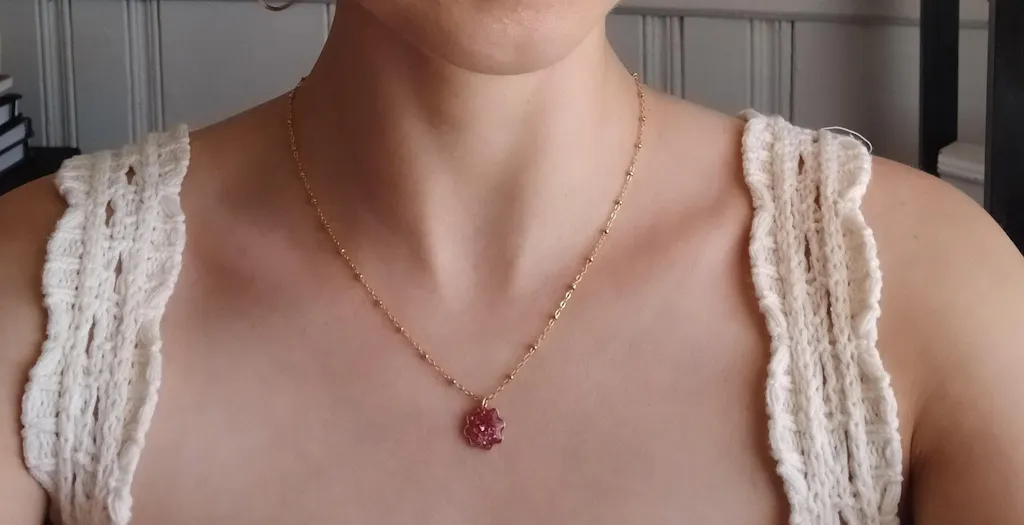

There is a moment most women recognize. You look down at your hand and your rings feel less like a stack and more like a pile. The pieces you loved separately are now competing for attention. The hand reads cluttered instead of considered.
A good ring stack does not happen by adding more. It happens by editing with intention.
This is the guide I share with clients who want their stacks to feel like a finished outfit. You will learn the anchor-and-support method, the rules for mixing metals quietly, and three real stack formulas you can build from the Kate Koel ring collection. Every formula uses pieces I make in my studio.
The One Rule That Solves Most Messy Stacks
Most messy stacks have no anchor. They are three or four rings of similar weight, all trying to be the hero. The fix is to choose one ring as the visual center, then let every other ring quietly support it. That single shift fixes more stacks than any other trick.

What Makes a Ring Stack Look Messy
Before we build a beautiful stack, it helps to name what goes wrong.
A stack reads cluttered when too many rings carry the same visual weight. Three textured bands shouting in unison feel chaotic, not curated. The eye has nowhere to land.
A stack reads forced when the metals are mixed without rhythm. One gold and one silver can look modern. One gold, one silver, one rose, and one antique can look like an accident.
A stack reads heavy when the band widths are not varied. Stacks need breathing room between thicknesses, not a wall of identical millimeters.
A stack reads uncomfortable when the rings spin, gap, or rub. Fit matters as much as design. If you are unsure of your size, our ring sizing guide walks you through measuring at home in a few minutes.
The Anchor-and-Support Method
This is the framework I return to every time.
Step One: Choose Your Anchor
Your anchor is the ring with the most personality. It is the piece you would still wear if you wore only one ring that day.
An anchor is usually one of three things. It can be a statement piece, like a galaxy or gemstone ring. It can be a textured wide band that catches light. It can be a meaningful gift you would never take off.
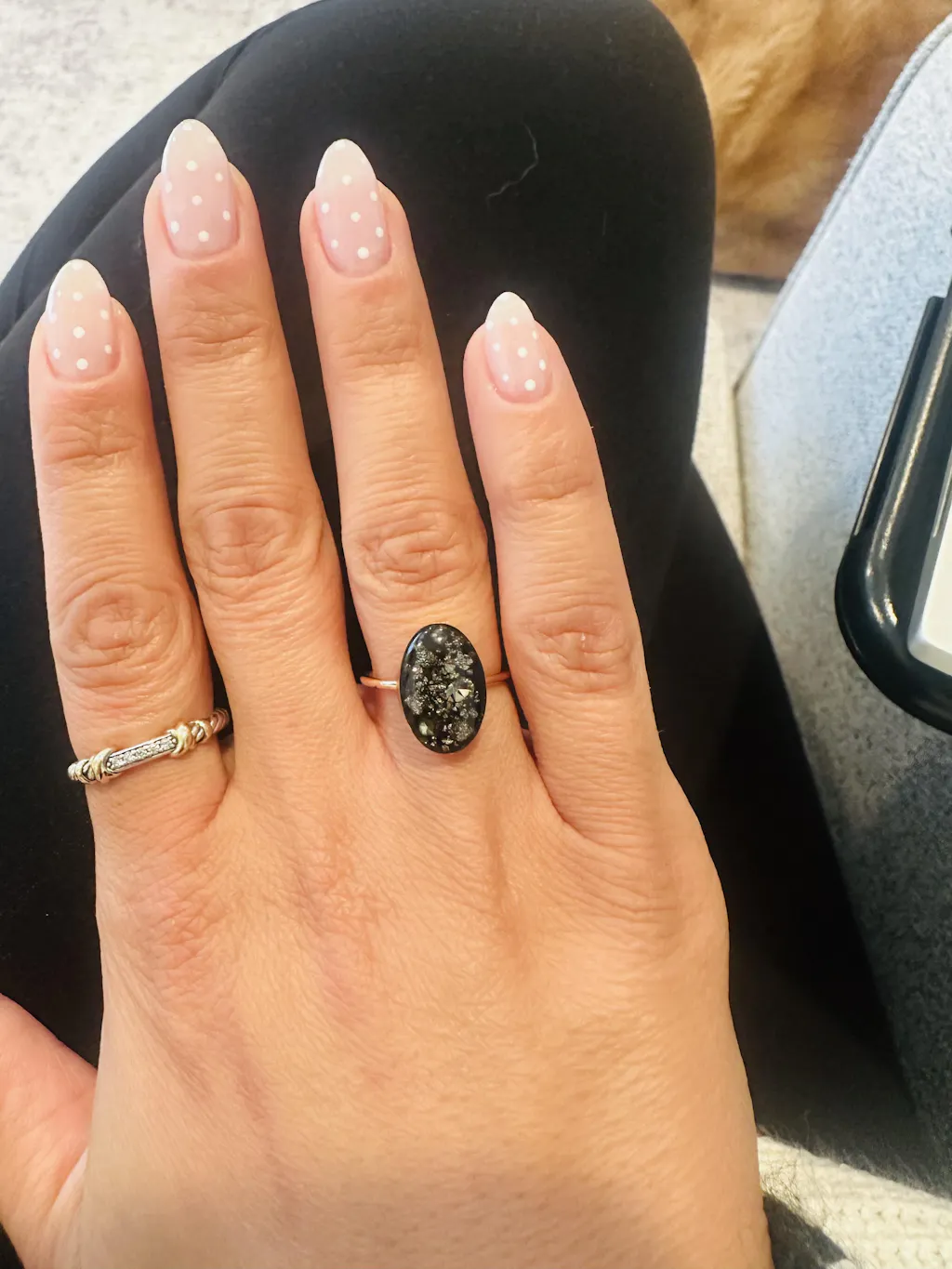
The Statement Oval Galaxy Ring is a natural anchor. Real crushed pyrite, obsidian, and black tourmaline are arranged by hand alongside Swarovski crystal grains. No two are identical. The depth pulls the eye and gives the rest of the stack something to orbit.
The Bold Stacker Ring is an anchor for a quieter wardrobe. Its hammered surface catches light at every angle without competing for color. It works beautifully in both sterling silver and 14k gold filled.

Step Two: Add Two Supporting Rings
Supporting rings should be thinner, simpler, or both. Their job is to frame the anchor, not compete with it.
If your anchor is colorful, choose supporting rings in plain metal. If your anchor is plain metal, your supporting rings can carry subtle texture or a small stone.
The Disco stacking ring is one of the most flexible supporters in the studio. The texture is playful but contained. It comes in three thicknesses, which gives you room to vary band widths inside a single design family.
The Snake Skin Textured Ring does similar work. The pattern adds quiet interest without color. It pairs well with both gemstone anchors and plain bands.
Step Three: Protect the Breathing Room
A great stack always includes one bare finger nearby. Empty space is part of the design.
If you stack on the ring finger, leave the middle finger bare or wear a single thin band there. If you stack on the middle finger, give the index finger room to rest. Negative space is what makes a stack look intentional rather than full.

How to Mix Metals Without It Looking Random
Mixing sterling silver and 14k gold filled is one of the most modern moves in jewelry right now. It is also the easiest place to look unfinished.
The principle is simple. Let one metal lead, and let the other appear at least twice.
If your stack is mostly gold, add one silver ring inside the stack. Then echo silver somewhere else on the hand, like a thin band on the opposite ring finger. That repetition makes the silver feel chosen, not accidental.
The reverse works the same way. A silver-led stack gains warmth from one gold ring, especially when paired with a gold pendant or hoops you already wear.
You do not need permission from anyone to mix metals. You only need rhythm.

How Many Rings Should You Stack on One Finger
There is no fixed number. There is a sweet spot.
For most women, three rings on one finger is the most flattering balance. It carries presence without crowding.
Three Real Ring Stack Formulas You Can Build Today
These are the stacks I find myself recommending most often. Each one is built from pieces in the studio.
Formula One: The Quiet Romantic
This stack is soft, feminine, and good for everyday wear.
Anchor: the Blue Flower Ring Set. The set already gives you a coordinated trio with real pressed Queen Anne's Lace captured in glass-like resin and a twist stacking band to tie it together.
Add: one plain 14k gold filled band on the adjacent finger to extend the warmth.
Leave: the middle finger bare. The flowers need space to be seen.
Why it works: the set was designed as a stack, which removes all guesswork. You get romance without effort.

Formula Two: The Modern Mixed Metal
This stack reads urban, considered, and slightly editorial.
Anchor: the Bold Stacker Ring in sterling silver. Its hammered weight gives the stack a grounded center.
Add: the Disco stacking ring in 14k gold filled, in the thinnest option, placed above the anchor.
Add: a second thin gold filled band below the anchor to repeat the gold and complete the rhythm.
Why it works: one bold ring, two whisper-thin gold echoes, and a clear lead metal. Nothing competes.
Formula Three: The Galaxy Statement
This stack is for the woman who wants her hand to feel like a small piece of art.
Anchor: the Statement Oval Galaxy Ring. Read more about the piece in our companion guide on what a galaxy ring means.
Add: the Snake Skin Textured Ring on the same finger, just below the galaxy.
Add: the Stacking Square Rings duo on the index finger as a contrast stack with cleaner geometry.
Why it works: the galaxy gets the spotlight while the square rings on a different finger create balance through repetition of form, not color.
Each formula above lives inside the Ring Sets collection or can be assembled from the broader Rings collection.

How to Stack Rings Across Multiple Fingers
A stack does not have to live on one finger. Some of the most beautiful hands carry their rings spread across three.
The rule is rhythm.
Wear a tall stack on one finger. Wear a shorter stack on a finger two away. Leave the finger between them bare or wear a single thin band there. That alternating pattern is what makes the whole hand read as one composition instead of a row of disconnected pieces.
Avoid stacking on every finger at once. Even when each individual stack is beautiful, the hand starts to feel uniform and loses the eye-catching contrast that makes stacking interesting in the first place.
Stacking Rings With a Cocktail or Statement Ring
A true cocktail ring is built to be the main event. When you wear one inside a stack, you have to honor that.
The simplest approach is to give the cocktail ring its own finger entirely. Then build a quiet two-ring stack on a nearby finger. The cocktail ring leads, the quiet stack supports the rhythm of the hand.
For more on this, our guide on how to style a cocktail ring walks through specific occasions and outfit pairings.

Sizing Tips That Make Stacks Comfortable
Most stacking complaints are sizing problems in disguise.
Thin bands of one millimeter to two millimeters usually fit at your true size. Wider bands of three millimeters or more often feel snug at your true size, so a quarter size up keeps them comfortable.
If you plan to wear three or more rings on one finger every day, your skin warms throughout the day and the stack can feel tighter by evening. A slight upsize on the widest ring in the stack solves it.
If you are unsure where to start, the ring sizing guide walks through measuring at home with a string or a printable sizer.
Caring for a Ring Stack
When rings live next to each other, they will touch. A few small habits keep them looking new.
Take your stack off before sleeping. Constant contact while you move at night causes the most micro-scratches.
Take your stack off before lotion, perfume, and cleaning. Resin and crushed-stone pieces are especially sensitive to chemicals.
Polish each ring individually with a soft cloth so the buffing does not press the rings into each other. The jewelry cleaning and care guide walks through specifics for 14k gold filled, sterling silver, and gemstone pieces.
Stored together, stacking rings should rest in a small soft pouch or a lined tray, not loose in a dish where they can knock together.
How to Build Your Stack Slowly
A stack rarely lands fully formed on the first try. The most beautiful ones grow.
Start with one ring you already wear and love. Pay attention to which finger it sits on, which side of which hand. That ring is almost always your future anchor.
Add a second ring that makes the first one look better. Resist the urge to add a third right away. Live with the pair for a few weeks. The way it moves with your clothes, your work, and your hands will tell you what is missing.
When you add the third, you will know exactly what it needs to do.
The slow build is the secret. Stacks that are bought all at once tend to look styled. Stacks that grow tend to look like the woman wearing them.

Frequently Asked Questions
How many rings should you stack on one finger?
Two to three rings on one finger usually looks the most intentional. Going higher works when the bands are thin and finished the same way. Comfort and proportion matter more than a strict number.
Can you mix sterling silver and 14k gold filled rings?
Yes. Mixing sterling silver and 14k gold filled looks modern when you let one metal lead and the other support. Repeat the secondary metal somewhere else on the hand to make the choice feel intentional.
What is the anchor ring in a stack?
The anchor is the most visually weighted ring in your stack. It is usually a statement piece, a gemstone ring, or a thicker textured band. Everything else should support it rather than compete with it.
Are stacking rings comfortable for everyday wear?
Stacking rings are comfortable when each ring fits well and the band widths suit your finger. Thinner bands stack more easily. If you plan to stack daily, size up by a quarter on rings wider than two millimeters.
How do you start a ring stack if you have never worn one?
Start with one anchor ring you already love. Add one thinner supporting band next to it. Live with that pair for a week before adding a third. Building slowly keeps the stack honest to your taste.