
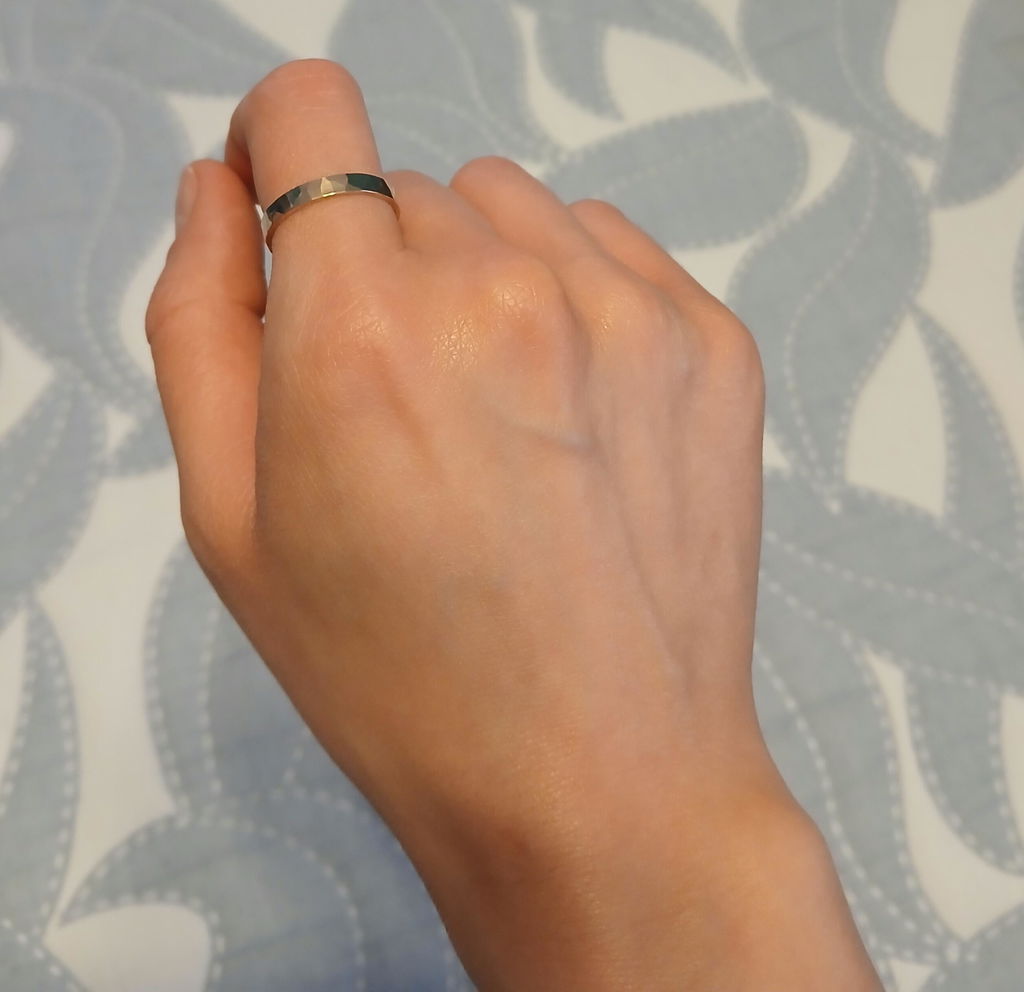
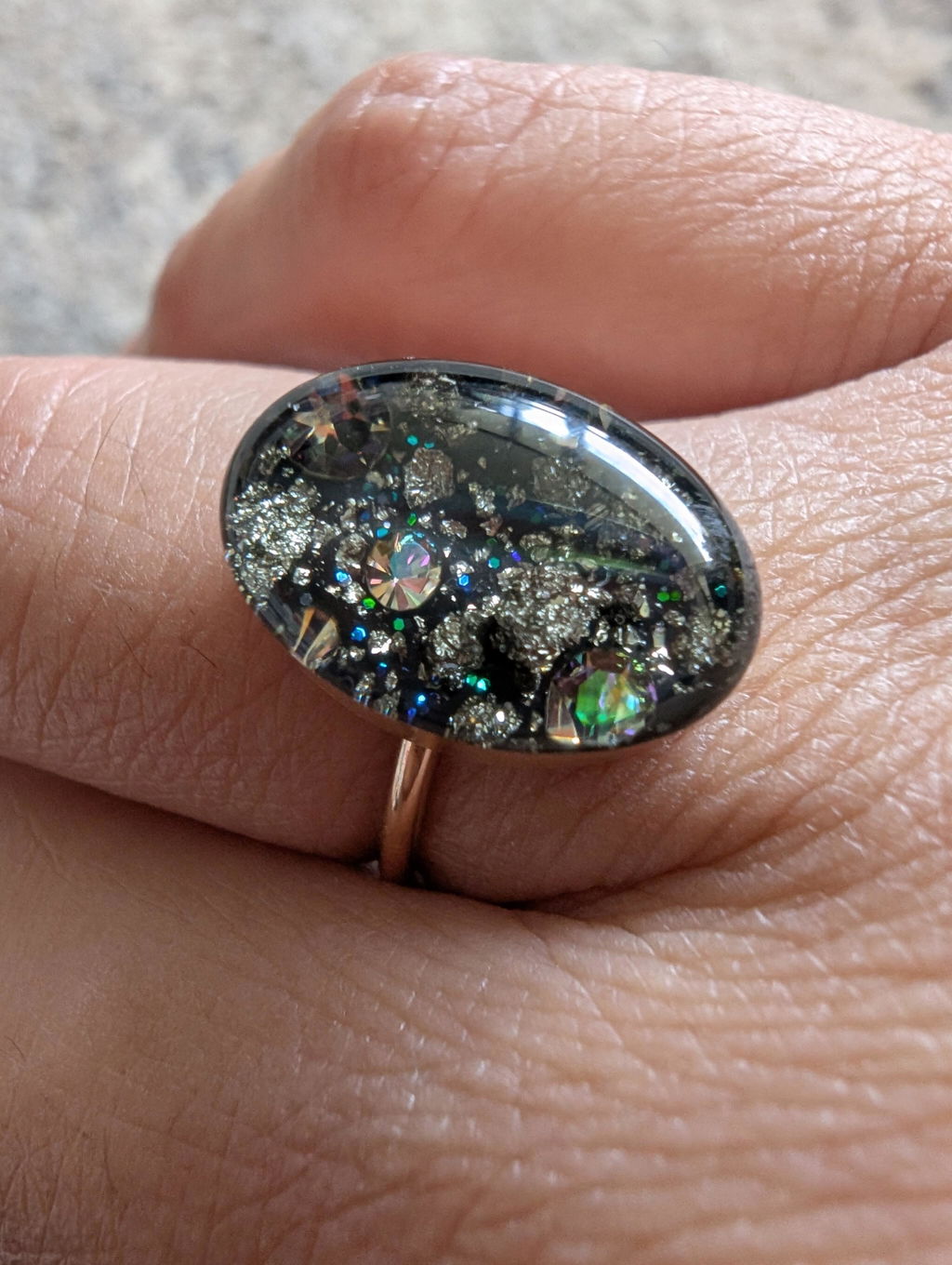
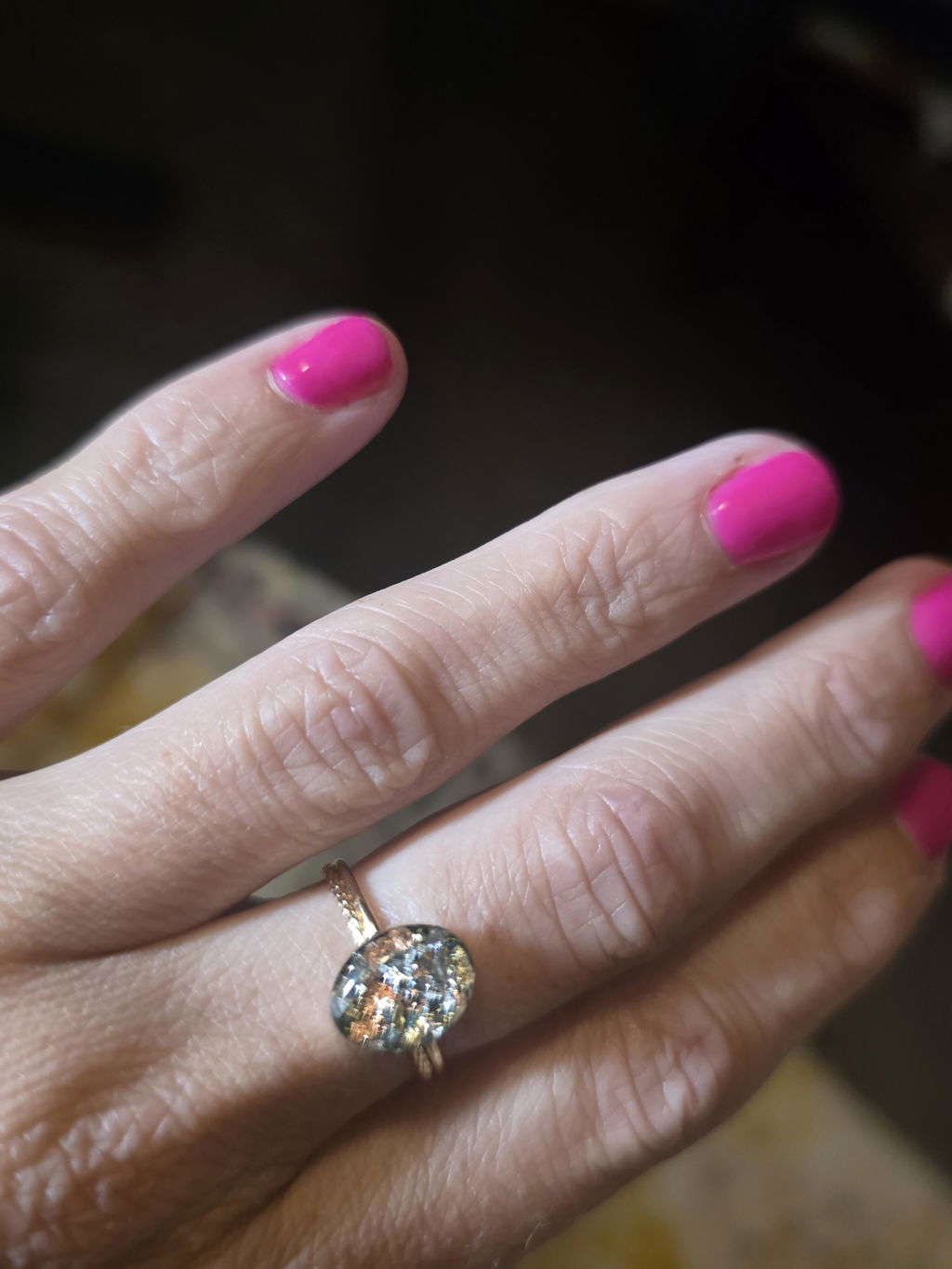














































Howlite mix
Every Kate Koel howlite piece is built around real howlite — a soft, chalky-white natural calcium borosilicate stone with web-like grey veining across a creamy white base. The marbled pattern you see in each piece is the stone’s own natural character, not a print or a finish. Howlite has been discovered in Nova Scotia in 1868 and has been prized ever since for its quiet, distinctive beauty. No two pieces look alike, because no two patches of howlite vein the same way.
Each piece is handmade in our Florida studio. Our metals are carefully selected for everyday wear and skin safety: rings are set in 14k gold-filled or sterling silver; pendant frames are gold-plated brass or rhodium-plated brass; earring posts are surgical steel, gold-filled, or sterling silver depending on the style. Made to order in 1–3 weeks, shipped with tracking.
Frequently asked questions
Yes, every Kate Koel howlite piece is built with real howlite, shown in its natural white-and-grey color. We do not dye the stone or use it to imitate turquoise. The grey veining and creamy white base you see are exactly what the stone looks like in nature. No two pieces look the same because no two pieces of howlite vein the same way.
We choose our metals carefully with skin safety in mind. Rings are set in 14k gold-filled or sterling silver. Pendant frames are gold-plated brass or rhodium-plated brass. Earring posts are surgical steel, gold-filled, or sterling silver depending on the style. The metals chosen are skin-safe and hypoallergenic where the construction allows.
Remove before applying perfume, lotion, or household cleaners, these can absorb into the stone and discolor it. Remove before showering or swimming. Store separately from harder jewelry. Wipe gently with a soft dry cloth after wearing. The protective surface is water-resistant and UV-stable and will not yellow under normal conditions. If the surface picks up a scratch you cannot polish out, contact us the surface can usually be restored.
What Is Howlite?
Howlite is a soft, white calcium borosilicate mineral with a distinctive chalky texture and web-like grey veining that runs across a creamy white base. It was first described by Nova Scotia geologist Henry How in 1868 — the stone was named in his honour. Today most of the world’s howlite is mined in Canada and California. In person, it can read almost like marble at first glance, but howlite is its own distinct stone with its own mineral composition, hardness, and character.
In Kate Koel’s howlite jewelry, real howlite is set by hand, so that the natural grey veining and creamy white surface are showcased on each piece exactly as the stone produced them. No dye, no artificial color, no imitation.
The Grey Veining That Makes Howlite Howlite
The signature of howlite is its grey veining — a web of fine to bold grey lines that threads through an otherwise creamy white stone. These veins form naturally as the mineral crystallizes, and their pattern shifts from piece to piece. Some howlite shows delicate spider-web lines; some shows bolder, more graphic swaths of grey. The same face of stone never repeats exactly. That variation is what makes each Kate Koel howlite piece one of a kind.
The grey veining is also why howlite has a quiet, marble-like elegance that pairs with nearly any outfit or metal tone. The contrast between the white base and the grey lines gives the stone visual depth that reads as sophisticated without shouting.
Howlite vs. Dyed-Howlite “Turquoise”
Here’s something most buyers don’t know: a significant amount of the turquoise-colored jewelry sold on large online marketplaces is not turquoise at all. It is howlite — dyed blue or green to imitate turquoise. Because howlite is porous and soft, it absorbs dye readily, and its natural grey veining mimics the matrix pattern of real turquoise closely enough to fool a quick scroll.
Kate Koel uses real howlite in its natural white-and-grey color — not dyed, not pretending to be something it isn’t. We think howlite’s natural palette is worth showing. The creamy white and grey is elegant, wearable, and entirely its own thing. Every piece in this collection is real howlite, shown as the stone actually looks when it comes out of the ground.
How Kate Koel Howlite Jewelry Is Made
Every piece starts in our Florida studio with real howlite. The stone is worked into the form each piece requires — hexagon, stud, dangle — and arranged by hand so the grey veining lands where it reads best. A clear protective lens is poured and sealed over the stone surface: water-resistant, UV-stable, and will not yellow. Each frame is then finished and polished by hand.
Because the grey veining runs differently through every piece of howlite, no two finished pieces ever look exactly the same. The pattern you see on your piece belongs to that piece alone.
How to Care for Your Howlite Jewelry
Howlite is a porous, relatively soft stone (Mohs hardness 3.5), which means it needs a little more care than harder stones. Remove before applying perfume, lotion, or household cleaners — these can absorb into the stone and discolor it over time. Remove before showering or swimming. Store separately from harder jewelry that could scratch the surface. Wipe gently with a soft dry cloth after wearing.
The protective lens on each Kate Koel howlite piece seals the stone surface and adds a layer of protection, but removing the piece before chemical contact is the most effective care habit. Cared for this way, your howlite piece is wearable for years — and if the surface ever picks up a scratch you cannot polish out, contact us and we will help restore it.